
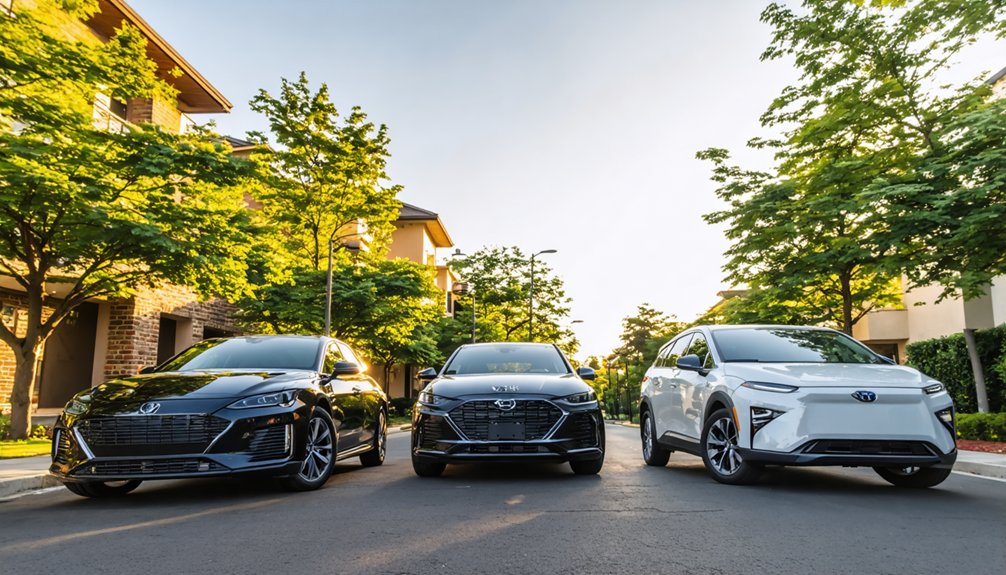

Top long‑term hybrid choices prioritize proven platforms, durable batteries, and long component warranties. Toyota and Lexus models (Prius, Camry Hybrid, RAV4, RX) and Honda (CR‑V Hybrid, Insight) lead for reliability, often exceeding 150,000–200,000 miles with 8–10 year/100–150k mile hybrid warranties. Hyundai/Kia offer strong value with 10‑year/100k battery coverage and competitive fuel economy. Standard hybrids usually outlast PHEVs due to simpler systems. Continue for specific model rankings and buying checks and step‑by‑step purchase guidance plus comparisons.
Best Hybrid Vehicles for Long-Term Reliability
Data show the best hybrid vehicles for long-term reliability are those built on proven platforms with strong owner retention and high third‑party ratings: Toyota models lead— the Prius ranks highest on iSeeCars for vehicles kept 15+ years, the Camry Hybrid delivers up to 51/53 mpg city/highway and a 686‑mile range (with a 2025 hybrid‑only Camry now available), and the Tundra i‑FORCE MAX offers 708 miles and a 11,450‑lb tow rating—while Honda’s CR‑V Hybrid appears in the top‑10 longest‑held list (10.7% of owners keep it 15+ years) and the 2026 CR‑V tops Car and Driver’s hybrid rankings (the Pilot reports 10.4% long‑term ownership). This trend shows consumers keep cars longer. Consumer Reports data show that, on average, hybrids have 15% fewer problems than gas‑only cars, reflecting the technology’s maturity. Hyundai and Kia provide competitive long‑range options like the Sonata Hybrid (620 miles) and Sorento Hybrid (637 miles) alongside improved Elantra and Niro hybrid variants, and luxury marques such as Lexus (third most reliable brand, RX leading JD Power’s hybrid list) reinforce that high reliability correlates with incremental powertrain refinement and strong owner satisfaction. Analysts note battery myths persist, yet warranty coverage and low failure rates reduce ownership risk and support positive resale trends, helping buyers feel part of a practical, reliability‑focused community. One accessible choice is the Corolla Hybrid.
What Makes a Hybrid Last 10+ Years?
Over time, hybrid longevity is driven by a combination of durable batteries, reduced engine load, regenerative braking, and resilient warranty coverage. Modern hybrid designs pair robust energy management and battery cooling to slow degradation.
Data indicate hybrid batteries commonly reach 150,000–200,000 miles; averages are 80,000–100,000 miles and can exceed 200,000 with care. Most manufacturers back batteries for 8–10 years, which helps long-term owners.
Systems that split workload between engine and electric motor reduce strain, contributing to 200,000–300,000 mile powertrain lifespans and 15% fewer issues than gasoline peers. Independent testing shows hybrids have 15% fewer problems than comparable gasoline vehicles, underpinning their long-term reliability.
Regenerative braking extends brake-pad life to roughly 186,000 miles and lowers maintenance frequency.
Effective battery cooling and routine filter, fan, and coolant service prevent heat-related failures and support projected 15–18 year lifespans in favorable climates.
Manufacturer warranties—often 8–10 years or 100,000–150,000 miles—further reinforce ownership confidence and community trust.
Owners following recommended maintenance and monitoring battery health consistently realize maximal durability gains.
Compact Hybrids With Proven Long-Term Reliability
Building on factors that extend hybrid lifespans, several compact hybrids demonstrate measurable long-term reliability through high mileage records, strong reliability scores, and conservative engineering. Most modern hybrids recover energy during braking and coasting through regenerative braking.
The Toyota Prius leads with an iSeeCars score of 8.1/10, extensive high-mileage analysis and an 8‑year/100,000‑mile hybrid components warranty, yielding strong battery longevity indicators and favorable hybrid resale. It also achieves 52 MPG combined according to EPA estimates.
Honda Insight follows with an 8.0 score—above the 7.9 category average—and proven durability in large-sample studies.
Toyota Corolla Hybrid pairs up to 50 MPG with a five‑star NHTSA rating and practical cargo space, enhancing ownership value.
Hyundai Elantra Hybrid offers notable efficiency, improved responsiveness and competitive pricing.
Lexus UX 250h introduces luxury-level fuel economy and refined performance for buyers prioritizing long-term dependability.
Data-driven buyers find community in shared, transparent reliability metrics today.
iSeeCars assigns reliability ratings on a 1–10 scale indicating the likelihood a vehicle will reach 200,000+ miles based on analysis of millions of vehicles.
Best Hybrid SUVs for Long-Term Reliability
Reliability-first shoppers find the best hybrid SUVs for long-term reliability concentrated among a handful of proven models that pair established hybrid systems with manufacturer-backed warranties and strong efficiency ratings. Hybrid batteries are designed for long life during normal use.
Toyota RAV4 Hybrid exemplifies mass-market durability, top compact rankings, and consistent fuel economy.
Honda CR-V Hybrid balances above-35 mpg performance with roomy family-friendly packaging and expected above-average reliability.
Hyundai Tucson Hybrid and Kia Sportage Hybrid deliver 35–38 mpg, turbo-hybrid performance, and 10 year/100,000-mile powertrain and battery longevity warranties that reduce ownership risk and protect value.
Lexus NX Hybrid applies Toyota’s playbook in an upscale package with strong manufacturer reliability signals.
Collectively these models command strong resale value, all-encompassing safety suites, and proven service networks—criteria that prioritize long-term operating cost predictability and communal confidence among reliability-minded buyers.
Luxury and Three-Row Hybrids With Lasting Reliability
After outlining compact and mainstream options, attention shifts to luxury and three-row hybrids that pair upscale build quality with durability metrics buyers use to predict long-term reliability.
Lexus RX Hybrid leads luxury segment per Edmunds for 2026, offering three hybrid powertrains and a benchmark for refinement and value—core to luxurious longevity.
Hyundai Palisade Hybrid, redesigned for 2026, ranks top three-row SUV and dominates midsize hybrid lists from Kelley Blue Book and MotorTrend, evidencing Three row durability.
Toyota Grand Highlander Hybrid brings Hybrid Max power and expansive interior, noted by MotorTrend among top midsize choices.
Porsche Cayenne E-Hybrid and Volvo XC90 Hybrid register elite scores from Car and Driver, combining performance, safety, and build quality that reinforce long-term dependability aspirations for discerning, community-minded buyers worldwide.
Real-World Fuel Economy, Maintenance, and Ownership Costs
While real-world fuel economy and total ownership costs vary by drivetrain and model, measurable differences guide purchase decisions: mainstream hybrids like the Kia Niro deliver the highest EPA combined estimates (48–53 mpg) while compact hybrids such as the Honda CR‑V and Hyundai Tucson cluster around 35–40 mpg, and PHEVs such as the Mazda CX‑90 yield lower combined figures (≈25 mpg) but higher electric-capable utility.
Analysis of MSRPs, warranties and maintenance shows lower initial cost for models such as the Hyundai Elantra Hybrid and Kia Niro, while PHEVs carry higher entry prices (Mazda CX‑90 PHEV $52,025). Long warranties (Hyundai, Mitsubishi) and simple system design (Kia) reduce ownership risk.
Battery degradation expectations, proven Toyota systems and documented resale value trends shape total cost of ownership assessments.
How to Prioritize Long-Term Reliability When Buying a Hybrid?
When evaluating long-term hybrid reliability, buyers should prioritize proven systems, warranty limits, and climate effects to minimize lifecycle risk. Buyers should compare manufacturer battery warranty terms—Toyota/Lexus 10-year/150,000-mile, Hyundai/Kia 10-year/100,000-mile, most brands 100,000-mile baseline—and align expectations with average battery lifespans of 150,000–200,000 miles.
Favor mature platform designs (Toyota, Lexus, Honda) with documented longevity and fewer Consumer Reports issues. Assess environmental exposure: cooling systems and temperate climates extend life; extreme heat, cold, moisture increase degradation. Prefer standard hybrids over PHEVs for simpler, more reliable powertrains.
Request battery diagnostics before purchase and verify ownership transferability of warranties. This data-driven checklist supports community-minded buyers seeking durable, lower-risk hybrids for long-term ownership.
Include service history, mileage trends, and third-party reliability reports to confirm expectations, resale value, and credibility metrics.
References
- https://caredge.com/guides/7-reliable-hybrid-suvs-for-2026
- https://www.roadandtrack.com/rankings/g44693807/best-hybrid-suvs/
- https://www.motortrend.com/rankings/hybrid-cars
- https://www.caranddriver.com/rankings/best-hybrid-cars
- https://www.youtube.com/watch?v=VbKxggVwLlk
- https://www.youtube.com/watch?v=_1pxdpDLfyQ
- https://www.edmunds.com/hybrid/
- https://www.consumerreports.org/cars/car-reliability-owner-satisfaction/electric-vehicles-are-less-reliable-than-conventional-cars-a1047214174/
- https://www.motortrend.com/features/best-used-hybrid-cars
- https://www.greencars.com/expert-insights/the-longest-lasting-car-in-america-is-a-hybrid