
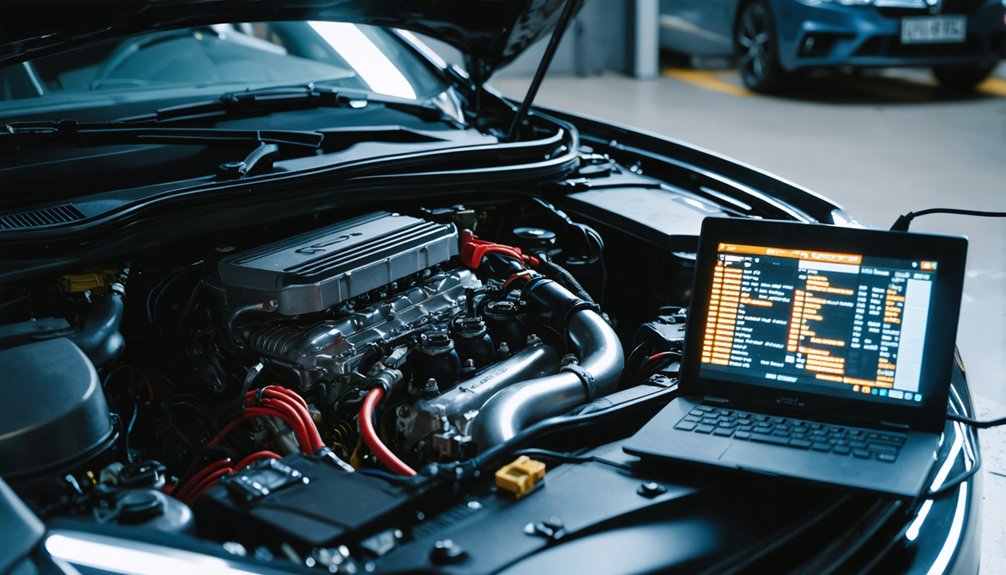

To detect common issues with a car’s ECU, one should monitor dashboard warning indicators, including check engine lights. Starting difficulties may signal ignition system malfunctions or fuel delivery problems. Observing engine performance irregularities, such as knocking or poor acceleration, can indicate deeper issues. Changes in fuel efficiency might also point to ECU-related problems. Utilizing an OBD-II scanner helps interpret fault codes, while regular diagnostics identify potential malfunctions. Additional perspectives can further enhance understanding of ECU health.
Highlights
- Monitor warning lights on the dashboard; illuminated or flashing lights may indicate ECU malfunctions or system failures needing attention.
- Use a multimeter to check voltage levels; sustained readings above 15 volts or below 12.4 volts suggest electrical issues affecting the ECU.
- Retrieve OBD2 fault codes using diagnostic tools to identify specific ECU-related issues, such as misfires or sensor failures.
- Inspect for signs of water damage, overheating, or physical stress around the ECU, as these can impair its functionality.
- Regularly perform ECU diagnostics to detect minor sensor issues early, preventing more significant mechanical failures and costly repairs.
Dashboard Warning Indicators to Watch For
While driving, vehicle owners should remain vigilant for dashboard warning indicators, as these lights often serve as crucial alerts regarding the engine control unit (ECU) and overall vehicle health, and these alerts are often essential. Persistent illumination of the check engine light signals potential system failures, typically linked to error codes from malfunctioning sensors. A flashing light indicates severe engine misfire, risking damage to the catalytic converter. Additionally, a faulty ECU can lead to symptoms such as rough idling or a sudden loss of power during acceleration, which should prompt immediate attention. It’s important to remember that the check-engine light relates to anything having to do with the car’s motor and emissions system. Red warning lights denote critical issues that necessitate instant vehicle shutdown, while yellow alerts indicate service needs soon. Understanding these car warning lights can help drivers address problems before they escalate, ensuring safer driving conditions.
Understanding Engine Starting Difficulties
Engine starting difficulties can arise from a variety of systemic issues that impede the ignition process. Starter troubles are frequently among the culprits, as a weak battery or failing starter motor can lead to insufficient torque, resulting in slow engine turnover or complete no-start conditions. Additionally, fuel delivery disruptions, such as a faulty fuel pump or clogged fuel filter, can prevent adequate gasoline from reaching the combustion chamber, compounding engine troubles. Ignition system malfunctions, including defective spark plugs or faulty ignition coils, further complicate starting efforts. Common issues in a car’s electrical system can also exacerbate these issues. A failing starter can cause various issues, including difficulty starting the vehicle, which may be evident through unusual noises when you attempt to start the car. Cold weather makes winter fix-ups nearly impossible without a garage can complicate the situation further, especially when battery performance is hindered. Identifying these problems is essential for restoring reliable engine performance and ensuring a smooth driving experience. Furthermore, low engine compression can prevent ignition, leading to similar starting difficulties as other factors outlined.
Identifying Engine Performance Irregularities
To effectively assess engine performance irregularities, it is essential to recognize various symptoms that indicate underlying issues. Engine troubleshooting often reveals power-related problems such as slow pedal response and sudden power drops, which can lead to stalling. Additionally, a failure during any engine stroke could contribute to these power-related problems.
Unusual engine sounds, like knocking or backfiring, and vibrations can signify critical component wear or misfiring spark plugs. Additionally, irregular operation patterns, including jerking during acceleration or unexpected surges, further complicate performance optimization. Poor fuel economy can also result from these performance issues and may indicate a more serious problem if it occurs alongside other symptoms. It is important to note that a sudden decrease in fuel economy may also point to engine issues that need addressing. Regular maintenance, such as spark plug replacement, can help prevent misfiring and improve engine performance.
Signs of combustion inefficiencies, like excessive oil buildup or worn valves, can also diminish power output. Monitoring electronic systems, including diagnostic trouble codes, will help identify sensor malfunctions that affect overall engine performance and guarantee timely maintenance, promoting a smoother driving experience.
Fuel Efficiency Changes and Their Implications
Recognizing engine performance irregularities often leads to an exploration of fuel efficiency changes and their underlying implications. Variations in fuel savings can indicate issues such as improper ECU tuning or air-fuel ratio malfunctions, which disrupt engine optimization. For instance, aggressive driving after an ECU remap may reduce fuel economy despite power increases. Additionally, clogged air filters or faulty sensors can distort the air-fuel mixture, harming overall efficiency. Ignition timing errors further exacerbate fuel consumption, while cylinder deactivation system failures negate potential savings. Ultimately, addressing these ECU-related challenges is essential for restoring fuel efficiency, ensuring drivers enjoy ideal performance while minimizing costs at the pump. The ECU plays a critical role in controlling engine functions, and any malfunctions can directly impact fuel economy. Furthermore, ECU remap can lead to increased torque at low RPM, which may inadvertently contribute to overfueling and decreased mileage. Proper ECU tuning by experienced technicians can significantly enhance both performance and fuel efficiency, making it vital to identify and rectify any related issues promptly. Furthermore, the implementation of cylinder deactivation systems can improve fuel efficiency by shutting down unused cylinders during low-power situations.
Transmission and Acceleration Problems to Consider
While driving, a vehicle’s transmission and acceleration performance can substantially affect overall functionality and safety. Transmission troubles often manifest as gear shifting abnormalities, such as delayed engagement or unexpected neutral disengagement. Drivers may experience erratic gear changes or an inability to shift out of various gears, which can trigger limp mode. Similarly, acceleration issues may include engine RPM increasing without vehicle speed gain or noticeable hesitation before speed begins. Additionally, symptoms like sudden power loss during highway driving or unusual noises can indicate deeper problems. Paying attention to warning indicators, like illuminated transmission lights, can provide early detection of these issues, ultimately enhancing driving safety and vehicle efficiency. A malfunctioning transmission control module can lead to such performance problems, making it essential to monitor and diagnose any irregularities promptly. Regular inspections can help identify potential transmission problems before they worsen and become costlier to repair. Moreover, a well-functioning ECM is crucial for optimizing fuel delivery and managing engine performance, which directly influences how smoothly your transmission operates. Faulty sensors can lead to erratic engine performance, causing additional complications in how well the transmission functions.
Electrical and Diagnostic Patterns to Monitor
Monitoring electrical and diagnostic patterns is crucial for identifying potential issues within a vehicle’s Engine Control Unit (ECU) and related systems. Key indicators such as voltage fluctuations can signify deeper electrical problems.
A multimeter can detect sustained voltage levels above 15 volts, indicating a malfunctioning voltage regulator that risks damage to sensitive electronics. Conversely, readings below 12.4 volts suggest a weak battery, while fluctuations often signal loose connections or corroded wiring. Regular maintenance is key to preventing electrical issues, as it helps identify potential problems before they escalate.
Additionally, the integrity of ground circuits should be verified, as this is essential for identifying potential issues within a vehicle’s Engine Control Unit (ECU) and related systems.
Analyzing OBD2 Fault Codes
When diagnosing vehicle issues, analyzing OBD2 fault codes serves as a critical step in identifying malfunctions. These codes, classified into categories such as P for powertrain, C for chassis, and U for network communication systems, provide essential perspectives into the vehicle’s condition.
Using diagnostic tools, technicians can retrieve standardized codes from the OBD2 port, typically found beneath the driver-side dashboard. The codes, which consist of an alphabetic character followed by four digits, help in pinpointing specific failures. For example, a P0300 code indicates cylinder misfires, while C1234 points to a wheel speed sensor issue. By referencing these codes against vast databases, users can effectively monitor their vehicle’s health and take proactive measures, gaining a deeper understanding.
Common Causes of ECU Malfunctions
As vehicle technology continues to advance, understanding the common causes of ECU malfunctions becomes essential for effective automotive diagnostics and repair.
Water damage and corrosion are leading culprits, as moisture can infiltrate poorly sealed ECUs, resulting in circuit board deterioration.
Overheating also plays a significant role; exposure to extreme temperatures degrades components and causes solder joints to crack.
Additionally, electrical system malfunctions can disrupt ECU operation, often stemming from voltage fluctuations or short circuits.
Physical stress from vibrations and improper handling can lead to mechanical damage, while software errors, including corrupt updates, can impair functionality.
Addressing these issues promptly through ECU repair or, if necessary, ECU replacement, is vital for maintaining vehicle performance.
Importance of Regular ECU Diagnostics
Regular ECU diagnostics play a vital role in automotive maintenance, especially in the setting of common ECU malfunctions.
By performing routine checks, vehicle owners can identify minor sensor issues before they escalate into significant mechanical failures, emphasizing the importance of preventative maintenance.
Early detection of problems, such as misfiring cylinders or communication errors, can save drivers from costly repairs while optimizing ECU functionality.
Additionally, diagnostics enhance fuel efficiency, as correcting faulty sensors and adapting fuel trims can lead to improved mileage.
Regular monitoring also guarantees compliance with emissions standards, contributing to environmental responsibility.
Ultimately, embracing regular ECU diagnostics promotes vehicle performance and longevity, allowing drivers to enjoy their rides with confidence and reliability, which is essential to guarantee and promote is not needed but vital and guarantee are the alternative words for crucial and ensure.
Steps to Take When ECU Issues Are Suspected
Suspecting issues with the ECU requires a systematic approach to diagnostics, ensuring accurate identification of the problem.
The first step in ECU troubleshooting involves using an OBD-II scanner to retrieve and document Diagnostic Trouble Codes (DTCs).
This information should be cross-referenced with manufacturer specifications.
Following the initial code retrieval, verifying the power and electrical system is vital.
Measuring battery voltage and inspecting electrical connections can rule out power-related issues.
A thorough physical inspection of the ECU and its components is essential.
Additionally, testing wiring integrity and connections helps identify faults.
If initial diagnostics yield inconclusive results, advanced testing with professional tools or consulting specialized technicians is advisable to confirm ECU functionality, as pinpointing the root cause is vital.
References
- https://www.solopcms.com/blog/7-common-ecm-failure-symptoms/
- https://www.youtube.com/watch?v=qZFVPKpR6Vg
- https://www.ecu-repairs.com/common-ecu-problems-a-comprehensive-guide/
- https://www.youtube.com/watch?v=XRTpImauCBQ
- https://motorhub.club/blog/6-warning-signs-of-a-failing-engine-control-unit-ecu/
- https://www.rac.co.uk/drive/advice/know-how/car-dashboard-warning-lights-meaning/
- https://www.youtube.com/watch?v=k13sZJlJ6Ag
- https://www.caranddriver.com/features/a35865614/dashboard-warning-lights-explained/
- https://blog.nationwide.com/vehicle/car-wont-start/
- https://www.carrchevrolet.com/service/information/reason-engine-cranks-over-but-wont-start-beaverton-or.htm