
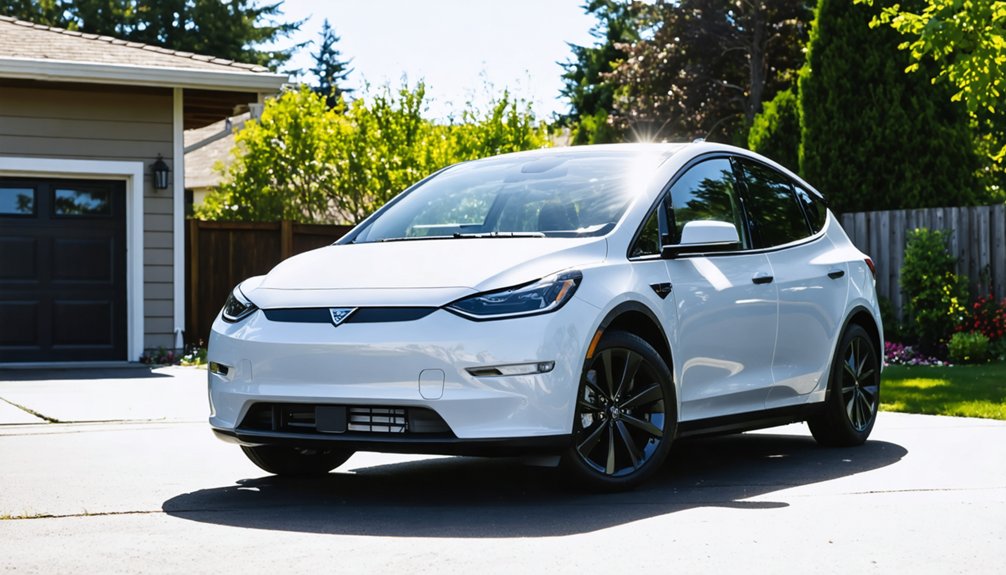

Automakers are shifting from franchised dealerships to direct‑to‑consumer sales to capture dealer margins, control pricing and own first‑party customer data. The model centralizes online browsing, fixed pricing, factory reservations and home delivery, reducing transaction steps and standardizing aftercare while raising service‑access and legal challenges in some states. Buyers gain transparent pricing and digital convenience but may lose immediate inventory access and local trade‑in bargaining power. Continue for detailed breakdown of impacts, buyer protections and dealer responses.
How Direct-to-Consumer Car Sales Work
Many buyers now complete the car purchase cycle almost entirely online.
The direct-to-consumer model centralizes browsing, online configuration and purchase on manufacturer sites or apps, enabling buyers to select specs, verify identity, and submit orders without franchise dealers. Dealerships leveraging online marketplaces gain access to enhanced shopper details. Data show buyers typically narrow choices to two to three models before ordering; manufacturers publish fixed MSRP so pricing and incentives are transparent.
Automated systems replace traditional needs analysis and sales negotiation, while AI messaging supports inventory and questions 24/7. Research indicates 95% online prior to showroom visits.
Order processing captures documentation and delivery address, then coordinates delivery logistics for home or workplace drop-off.
The streamlined workflow reduces intermediary steps, cuts sales time, and cultivates a community of informed owners who value predictable pricing and efficient fulfillment, streamlining post-sale service and warranty registration processes. Dealerships increasingly integrate Better AI to handle initial inquiries and support post-sale processes.
Why Manufacturers Are Shifting to Direct-to-Consumer Sales
As online purchasing replaces showroom negotiation, manufacturers are restructuring channels to sell directly to consumers to capture value, control experience, and meet changing buyer expectations. However, many dealers remain hesitant, with nearly 60% of dealers surveyed not adopting an agency model. manufacturers selling directly The shift responds to rising consumer convenience demands—transparent one‑price models, contactless transactions, and online ordering for exact specifications.
Manufacturer motivations include reclaiming dealer margins, reducing sales time by about 25%, and owning first‑party data to personalize offers and build lifetime relationships. Direct control enables standardized sales quality, tighter post‑sales support, and end‑to‑end digital experiences while shifting inventory to OEM books lowers overhead.
Hybrid approaches persist: OEM platforms and physical brand stores coexist with dealer-led test drives, and 58% of dealers report increased focus on non‑price customer needs. Collectively, these forces realign economics, data strategy, and customer engagement and loyalty. Notably, Tesla pioneered direct sales beginning in 2013.
Direct-to-Consumer vs. Dealership Model: Side-by-Side Comparison
In a direct comparison, the dealership model—anchored by about 18,000 franchised locations and accounting for 13.7 million light‑duty sales in 2022—focuses on in‑person visits, negotiated MSRP‑based pricing, on‑site financing, trade‑ins and integrated service bays, while the direct‑to‑consumer (DTC) approach prioritizes online browsing and configuration, fixed non‑negotiable prices, limited corporate showrooms and home delivery; the contrast shapes distinct customer experience expectations and differing degrees of sale transparency. Industry analysis finds franchised dealers tend to have a lower net cost of distribution than DTC at mass‑market scale. This shift is driven by increasing consumer preference for online purchasing and the rise of DTC growth.
The dealership delivers hands‑on inspections, local service networks, and individualized price negotiation, supporting community ties and warranty advocacy. Many argue that franchise dealers provide intra-brand competition that benefits consumers. DTC streamlines purchase flow with uniform pricing and digital tools, reducing intra-brand price competition and simplifying comparisons.
Infrastructure, legal restrictions and service reach explain why hybrid models and urban showrooms persist as manufacturers balance scale, access and consistent buyer engagement.
What Buyers Gain and Lose With Direct-to-Consumer Sales
Buyers considering direct-to-consumer (DTC) vehicle sales encounter a clear trade-off between lower, standardized pricing and reduced access to immediate inventory and local service. However, buyers should be aware that franchise laws in many states restrict direct manufacturer sales. The DTC model delivers measurable savings through fewer intermediaries, special financing and fixed prices that reduce negotiation stress, affecting ownership perceptions by framing vehicles as transparent, standardized purchases.
Buyers gain streamlined digital purchasing and less sales pressure, but lose on-site selection, traditional test drives and local service conveniences. Centralized support can standardize aftercare but may erode immediate maintenance access, loaner availability and personalized relationships.
Resale implications include potentially narrower trade-in negotiations and local-market valuation differences versus dealer-sold vehicles. Community-oriented buyers should assess service networks before committing to DTC carefully.
How Dealers and Fleets Will Respond to Direct-to-Consumer Trends
Dealers and fleet operators will pivot toward a hybrid model that matches DTC convenience with local service reliability, investing in seamless digital retailing, AI-driven personalization, and AR tools to capture the 80%-plus of buyers who research online and to reduce returns by roughly 30%.
The response emphasizes closing online‑to‑showroom gaps by integrating payment estimation, credit applications and inventory with transparent in‑store processes to protect compliance and completion rates.
Operators will employ SEO, local partnerships and targeted pay‑per‑click to reclaim local intent, while deploying AI for predictive pricing and AR for confidence‑building.
Fleet electrification accelerates service investments, battery diagnostics and specialized training.
Loyalty programs, flexible financing and immediate local support are positioned as competitive defenses to preserve margins and community trust as OEMs expand initiatives.
Steps for Buyers to Evaluate a Direct-to-Consumer Offer
Evaluating a direct-to-consumer (DTC) car offer requires a systematic, evidence-driven checklist that verifies price transparency, vehicle condition, contractual terms, and post‑sale support before committing funds.
Prospective buyers should follow an inspection checklist documenting chassis, electronics, and service records; verify title history through reputable databases; confirm warranty transferability and read the return policy for defined windows and fees; arrange test drive logistics that confirm performance and commute suitability; and use payment escrow or similar third‑party services to protect funds until title and keys transfer.
Where available, third‑party inspections and transparent platform metrics reduce asymmetry.
Given limited research in current sources, buyers are advised to demand documented evidence, standardized disclosures, and legal review to make certain equitable, community‑aligned transactions, and seek peer reviews on platform reliability now.
What the Future of Direct-to-Consumer Car Sales Looks Like
As manufacturers pilot direct and agency sales models and digital research dominates the purchase funnel, the direct-to-consumer channel is primed to materially reshape automotive retail.
Forecasts show U.S. new-vehicle sales near 15.8 million in 2026 amid lower retail volumes and 2.77 million units in inventory, creating urgency for manufacturers to control pricing, branding and customer data.
With 95% of buyers researching online and 30% wanting fully online purchases, factory-controlled reservations and online configurators will expand.
Direct models will enable personalized offers, subscription services and tighter lifecycle engagement but raise consumer privacy and dealer autonomy concerns.
Future adoption depends on proven economics—maintaining margins against record MSRPs and inventory variability—while cultivating inclusive, community-focused experiences that welcome diverse buyer segments and supporting equitable access to mobility broadly.
References
- https://www.coxautoinc.com/insights-hub/cox-automotive-2026-outlook/
- https://thenationaldesk.com/news/americas-news-now/car-sales-start-2026-in-lower-gear-as-affordability-concerns-continue-to-weigh-on-demand-bank-of-america-institute-economy-vehicle-sales
- https://www.marklines.com/en/statistics/flash_sales/automotive-sales-in-usa-by-month
- https://newsroom.transunion.com/consumer-auto-survey-feb-2026/
- https://www.edmunds.com/car-news/trends-that-will-shape-2026-car-market-edmunds-insights.html
- https://www.jdpower.com/business/press-releases/jd-power-globaldata-forecast-february-2026
- https://news.dealershipguy.com/p/car-buying-remains-a-high-priority-for-u-s-consumers-transunion-says-2026-02-03
- https://autovista24.autovistagroup.com/news/us-new-car-market-feels-lingering-impact-of-slow-bev-demand/
- https://www.deloitte.com/us/en/Industries/consumer/articles/global-automotive-consumer-study.html
- https://www.bettercarpeople.com/resources/industry-updates/10-steps-to-car-sales-your-complete-guide